Your kitchen feels dated. The cabinets scream “builder-grade,” and every time you walk in, you wonder if a full remodel is the only answer. Here’s the truth: professional cabinet painters can turn those basic boxes into something that looks like it belongs in a designer showroom—without the $30,000 price tag of new custom cabinetry. The right paint techniques, colors, and finishing details can make builder-grade cabinets look custom, and the results often fool even the most discerning eyes.
The average custom cabinet installation runs between $500 and $1,200 per linear foot. A professional cabinet painting project? Typically $3,000 to $7,000 for an average kitchen. That’s a savings of 70% or more while achieving a similar visual impact.
Key Takeaways:
- The right paint color can add $5,000 to $10,000 in perceived value to your kitchen.
- Hardware upgrades paired with fresh paint create the biggest visual impact for the lowest cost.
- Professional-grade finishes like lacquer and catalyzed coatings outlast DIY paint jobs by 5-10 years.
- Adding simple trim details before painting can transform flat-panel doors into custom-looking raised panels.
- White and off-white colors remain the most popular for resale value, but bold colors are trending in 2024.

Why Builder-Grade Cabinets Look Cheap (And How Paint Fixes It)
Builder-grade cabinets have a few telltale signs. The finish is usually a thin thermofoil or basic stain. The doors are flat slabs with no detail. The hardware is cheap brass or basic chrome. And the color? Almost always honey oak or a washed-out maple.
Paint addresses the biggest offender: that dated finish. A fresh coat of high-quality cabinet paint creates a smooth, uniform surface that reads as expensive. The sheen catches light differently. The color feels intentional rather than default.
But paint alone isn’t the whole story. The best results come from combining the right color, the right finish, and a few strategic upgrades that trick the eye into seeing custom work.
The Colors That Make Cabinets Look Expensive
Not all paint colors carry the same weight. Some scream “budget flip.” Others whisper “designer kitchen.” Here’s what works:
Classic White and Off-White
White cabinets have dominated kitchen design for a reason. They photograph well, they reflect light, and they never feel dated. But not all whites are created equal.
Stark, bright white can look cheap under certain lighting. It shows every imperfection and can feel sterile. The whites that read as expensive have warmth to them—a hint of cream, a touch of gray, or a subtle undertone that softens the overall look.
Benjamin Moore’s “White Dove” and Sherwin-Williams’ “Alabaster” consistently test well with homeowners and real estate agents. They’re warm enough to feel inviting but neutral enough to work with any countertop or backsplash.
Deep, Rich Colors
The trend toward bold cabinet colors has exploded. Navy blue, forest green, and charcoal gray all read as intentional design choices rather than default builder selections.
The trick with dark colors is the finish. A dark color with the wrong sheen looks flat and cheap. Dark colors need a subtle satin or semi-gloss finish to catch light and create depth. This is where professional application makes the biggest difference.
Two-Tone Combinations
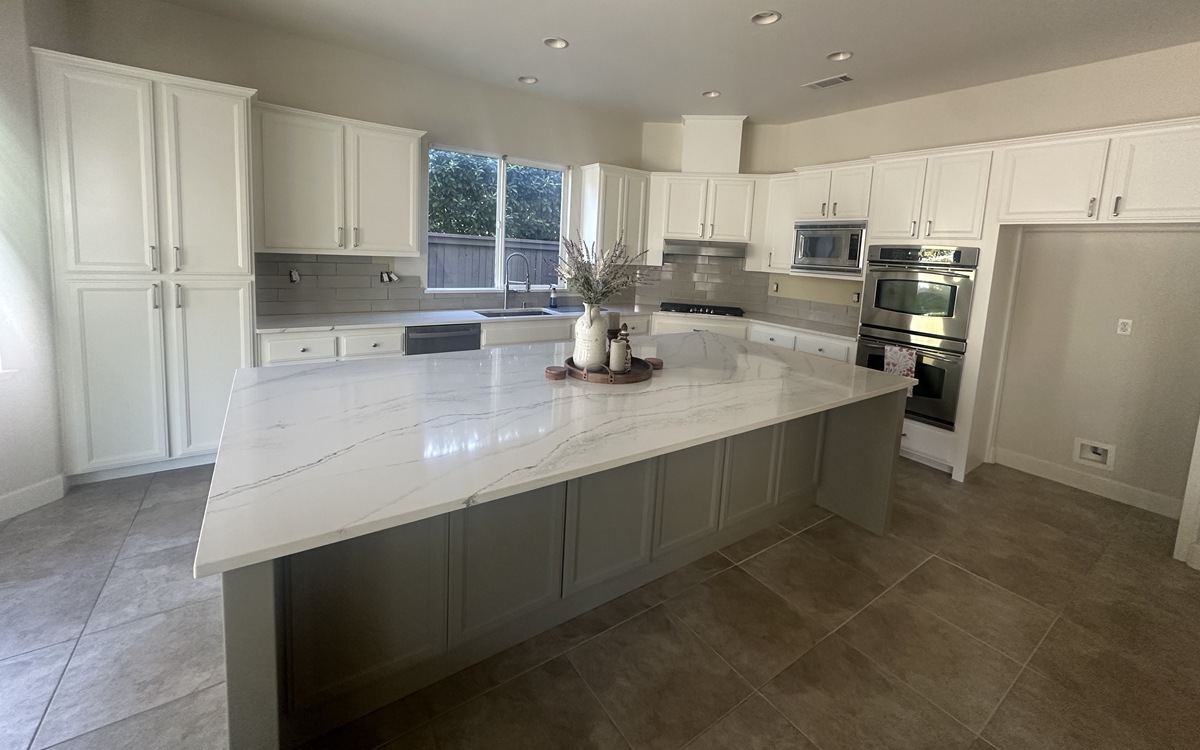
Nothing says “custom” quite like a two-tone kitchen. Painting upper cabinets a lighter color and lower cabinets a darker shade creates visual interest and suggests deliberate design work.
This approach also works for kitchen islands. A contrasting island color draws the eye and makes the space feel curated rather than cookie-cutter.
The Finish Matters More Than You Think
Walk into a model home with custom cabinets and run your hand across the door. The finish is glass-smooth with no brush strokes, no orange peel texture, and no drips. That’s what separates a $50 DIY job from a $5,000 professional result.
Sprayed vs. Brushed Finishes
Professionals spray cabinets because brushes leave marks. Even the best brush technique can’t match the smooth finish of properly sprayed paint. This single factor accounts for most of the “cheap look” in DIY cabinet projects.
Spraying also allows for thinner coats that build up evenly. Brush-applied paint tends to pool in corners and create uneven thickness that shows in the final result.
Lacquer and Catalyzed Coatings
The paint itself matters. Consumer-grade latex paint from the hardware store will chip, scratch, and yellow within two to three years. Professional cabinet painters use conversion varnishes, catalyzed lacquers, or commercial-grade alkyds that cure harder and last longer.
These finishes resist fingerprints, clean easily, and maintain their sheen for a decade or more. The upfront cost is higher, but the longevity makes it worthwhile.
Hardware: The Cheapest Upgrade With the Biggest Impact
You can spend $3,000 on a beautiful cabinet paint job and ruin it with cheap hardware. The opposite is also true—great hardware can make a modest paint job look expensive.
What Makes Hardware Look Expensive
Weight matters. Pick up a cheap cabinet pull and then pick up a quality one. The difference is obvious. Expensive hardware has heft, smooth edges, and a finish that doesn’t flake or tarnish.
Style matters too. Ornate, overly decorative hardware often looks dated. Clean lines, simple shapes, and quality materials read as modern and expensive regardless of actual price.
The Best Bang for Your Buck
Matte black and brushed brass hardware are trending, but they’re also affordable. You can find quality pulls in these finishes for $3 to $8 each. For a kitchen with 30 cabinets, that’s $90 to $240 in hardware that completely changes the look.
The key is consistency. Use the same hardware throughout the kitchen. Mixing styles or finishes breaks the illusion of intentional design.
Simple Trim Details That Create Custom Character
Flat-panel doors are the hallmark of builder-grade cabinets. They’re cheap to manufacture and look like it. Adding trim details before painting transforms them into something that resembles high-end shaker or raised-panel designs.
Adding Cabinet Molding
Crown molding at the top of upper cabinets is the single biggest visual upgrade you can make. It closes the gap between cabinets and ceiling, draws the eye upward, and instantly adds a custom feel.
Light rail molding under upper cabinets creates a similar effect at the bottom edge. These pieces are inexpensive—often less than $5 per linear foot—but the visual impact is significant.
Applying Trim to Flat Doors
For flat-slab cabinet doors, adding thin trim pieces creates the look of a shaker-style door. This technique involves gluing or nailing thin strips of wood to create a frame detail on each door face.
When painted, the seams disappear, and the doors look like they were manufactured as shaker style. The cost is minimal—a few dollars in trim per door—but the result adds hundreds in perceived value.
The Professional vs. DIY Question
We get this question constantly: “Can I paint my cabinets myself and save money?”
The honest answer is yes—but probably not with the results you want.
DIY cabinet painting can work for a weekend cabin or a rental property where longevity doesn’t matter. For your primary residence, where you’ll live with the results for years, professional application pays for itself.
Here’s why:
Prep Work Is 80% of the Job
Professionals spend more time prepping than painting. Proper preparation includes removing all doors and hardware, degreasing every surface, sanding to create adhesion, filling holes and imperfections, priming with the right product, and sanding again between coats.
Skip any of these steps and the finish fails. Peeling paint, visible brush strokes, and uneven coverage all trace back to prep shortcuts.
Equipment Matters
Professional cabinet painters use HVLP spray systems that cost thousands of dollars. They have spray booths or tents that control dust and overspray. They have the training to apply coatings at the right thickness and the right conditions.
A $50 sprayer from the hardware store won’t produce the same results. Neither will a brush, no matter how expensive.
Time Is Money
A professional crew can paint an average kitchen in two to three days. A DIY project often stretches across multiple weekends, leaving your kitchen unusable for weeks. Factor in the value of your time and the inconvenience cost, and professional painting often costs less than doing it yourself.

What to Expect From a Professional Cabinet Painting Project
If you decide to hire professionals, here’s how the process typically works:
Initial Consultation
A qualified painter will inspect your existing cabinets, discuss your color preferences, and identify any repairs needed before painting. They should provide a detailed written estimate that breaks down labor, materials, and timeline.
Preparation Phase
The crew removes all doors, drawers, and hardware. They label everything for reinstallation. Cabinets are cleaned, degreased, and sanded. Any damage is repaired. Primer is applied to create a bond between the old surface and new paint.
Painting Phase
Doors and drawers are typically painted off-site in a controlled environment. Cabinet boxes are painted in place with careful masking to protect surrounding surfaces. Multiple coats are applied with proper dry time between each.
Reassembly
Once everything is fully cured—often a week or more for catalyzed finishes—doors and drawers are reinstalled with new or existing hardware. The crew makes any final touch-ups and ensures everything opens and closes properly.
Real Numbers: What Cabinet Painting Costs
Pricing varies by region, cabinet condition, and paint quality. Here are typical ranges for a standard kitchen with 30 cabinet doors:
- Budget option (DIY-quality materials): $1,500 to $2,500
- Mid-range professional: $3,500 to $5,500
- Premium professional (lacquer or conversion varnish): $5,500 to $8,000
Compare that to new cabinet costs:
- Stock cabinets from big box store: $5,000 to $10,000 installed
- Semi-custom cabinets: $15,000 to $30,000 installed
- True custom cabinets: $30,000 to $50,000+ installed
Painting delivers 80% of the visual upgrade at 20% of the replacement cost.
Signs Your Cabinets Are Good Candidates for Painting
Not every cabinet should be painted. Some are too far gone. Others have construction issues that paint won’t fix. Good candidates for painting include:
- Solid wood or plywood box construction (not particleboard)
- Doors and drawers that open and close smoothly
- No major water damage or delamination
- Functional hinges and drawer slides
- A layout that works for your kitchen
If your cabinets are falling apart, have extensive water damage, or the layout doesn’t work for your needs, replacement might be the better investment.
Your Kitchen Can Look Expensive Without the Expensive Price Tag
Those builder-grade cabinets don’t have to define your kitchen. The right paint color, a professional-grade finish, quality hardware, and a few trim details can create a space that looks and feels custom.
The transformation takes days, not weeks. It costs thousands, not tens of thousands. And when you walk into your kitchen afterward, you won’t see “builder basic” anymore. You’ll see a space that looks like you planned every detail.
Ready to see what professional cabinet painting can do for your home? Contact TRICO PAINTING at 916-957-2633 for a free consultation. We’ll assess your cabinets, discuss color options, and provide a detailed estimate—no pressure, no obligation. Your kitchen is waiting for its upgrade.